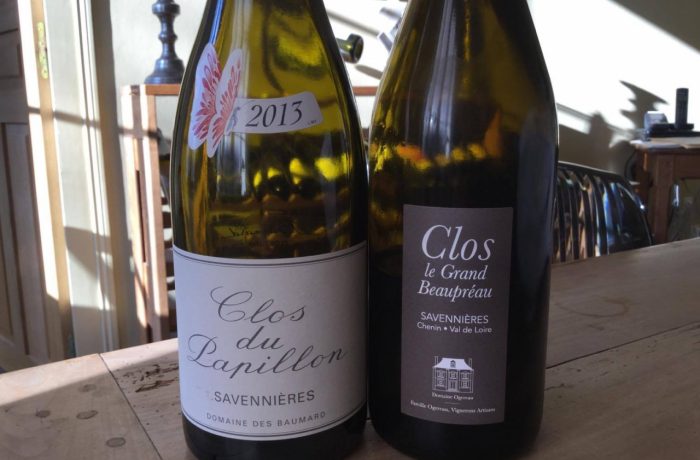
Following our lively Zoom tasting on Saturday, I wanted to share my thoughts on two of the wines that I tasted during our session.
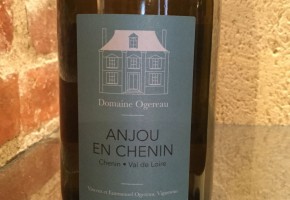
If you remember I had the Clos du Papillon 2013 from Domaine des Baumard and the Clos du Grand Beaupréau 2018 from Domaine Ogereau.
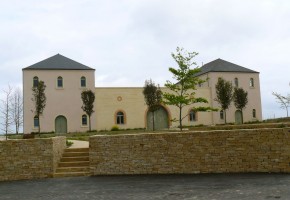
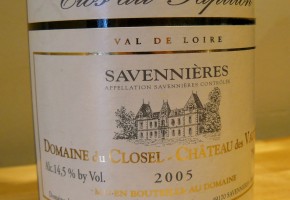
Both estates are located on the south side of the Loire like many of the outsiders that now make great wine in the appellation.

Clos du Papillon 2013 Domaine des Baumard
Grown on schist, sand and sandstone in the famous Clos de Papillon, one of Savennières most famous parcels. The vines are 35 years old and are handpicked, low temperature fermented and then have 9 months ageing on the fine lees in stainless steel.
The aromas of this wine are quite unlike those that I identify on any other Savennières. There’s a purity of fruit and clean quality that is very beguiling. After much soul searching to find the aroma I’m after it comes to me – papapya. That’s it, hints of ripe papaya with lemon grass and celery. It’s a soft attractive, floral nose that is quite unique. Add to that citrus and a touch of smoke and then a final note of tangerine.
On the palate it’s ripe and rich with a hint of classic agrumes (citrus style bitterness) that is classic to Chenin Blanc. My only quibble is that it’s not terribly long. It doesn’t linger in the mouth for long after you taste it. This is probably down to the vintage year, 2013, a difficult year in the Loire.
Clos de Grand Beaupréau 2018 Domaine Ogereau
Very different in style, this one has been fermented and aged in 400 and 500L oak barrels for 18 months. It comes from the highest point in Savennières around the Moulin de Beaupréau (75m) and the terroir is schist with windblown sand.
A totally different profile on the nose to the Clos du Papillon. It’s more citric and spicy with hints of vanilla, quince, pear and white flowers. Tighter and more restrained. Elegant and mineral.
Full and rich on the palate, the oak ageing is apparent but doesn’t dominate and there are notes of hazlenuts and pear with a savoury note. It feels quite a big wine in the mouth and has great length. A hint of tannin is also preceptable on the tongue which gives it structure and texture.
They’re very different. I might even be hard pressed to identify Chenin on the Baumard wine if it was served blind but I love the way there is nothing to hide the fruit of the wine, its purity and freshness. Hard to believe there is such a difference in the age of the two wines too. Bottling under screw cap clearly changes everything.
I’m wondering if any of you had the chance to retaste the following day. Savennières is one of those wines that changes and evolves with oxygen and time.
We retasted on Sunday evening and found them both to be more open and expressive. The oak character on the Ogereau wine was more apparent and the agrume quality a little more intense.