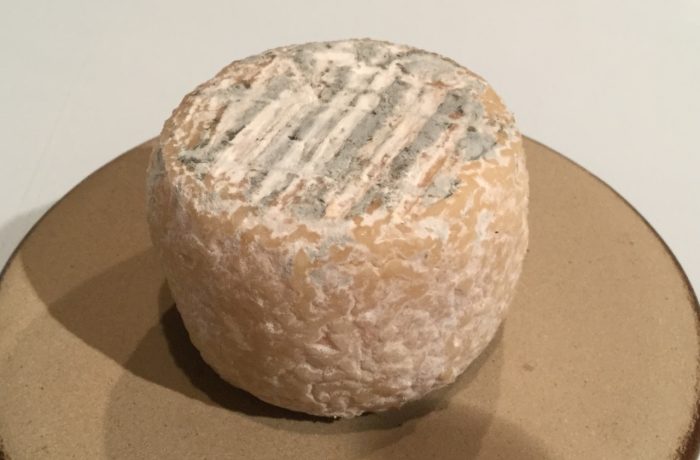
Le Crottin de Chavignol is the most famous goat’s cheese from the Loire valley. It takes its name from Chavignol, a little village just a few kilometres from Sancerre where cheese has been made since the 16th century. Production increased in the post-phylloxera years at the beginning of the 19th century as more land was used for raising goats and the first ‘affineurs’ (people who collected cheeses, looked after them and then sold them on) started collecting cheeses from the individual farms and transporting them up to Paris thanks to the newly installed railway line. In 1862 there were 14,359 goats in the region.

The best known goat’s cheese from the Loire, le Crottin de Chavignol
Although the literal translation of crottin is droppings, the crottin actually takes it name from the Berrichon term ‘crot’ which means hole. Berrichon is an old French dialect that was traditionally spoken in the French province of Berry. A crot was a place by the riverside where women used to do their washing and the clay soil in these areas was used by local peasants to make moulds for draining the curds during cheesemaking. These moulds, known as crots gave their name to their contents, crottins hence le Crottin de Chavignol.
Le Crottin de Chavignol was granted AOP status in 1976 and DOP status in 1996. This means its production is strictly controlled. Raw milk must come from one breed of goat only, the Alpine breed, they must be nourished by feed produced within the zone of production and each one has a minimum surface area requirement for grazing.
It has a fine natural rind that can be cream or slightly blue in colour. The interior is smooth, white or ivory in colour and melts in the mouth. Aged for a minimum of 10 days its texture and flavour changes over time. When ‘mi-sec it’s smooth and gentle with a freshness and classic goat’s cheese taste, when ‘bleu’ its character is stronger. It has an earthy flavour and hints of mushroom. Kept in traditional sandstone pots (like the one in the picture) it remains smooth in texture but with a stronger flavour.

A traditional sandstone pot used for ageing the Crottins
Coming from the same terroir, Sancerre is the perfect wine to serve with this very local cheese. I particularly love a goat’s cheese salad and will post a recipe for this in the coming months. One crottin is the perfect portion size for one person and makes for a delicious light lunch.